
Deep Borewell Submersible Pump Repair Diagnosing Winding Burnout,
Sand Locking, Cable Drops & Extraction Protocols
Guide to borewell pump winding faults, sand locking, cable issues and repair solutions.
When a society’s 5 HP borewell pump or an industrial plant’s 10 HP deep-well unit suddenly stops delivering water, guesswork gets expensive fast. Pulling 500 feet of GI or heavy HDPE delivery pipe only to discover a burnt starter contactor, a compromised underwater cable joint, or a dry summer water table wastes an entire day and unnecessary rigging cost.
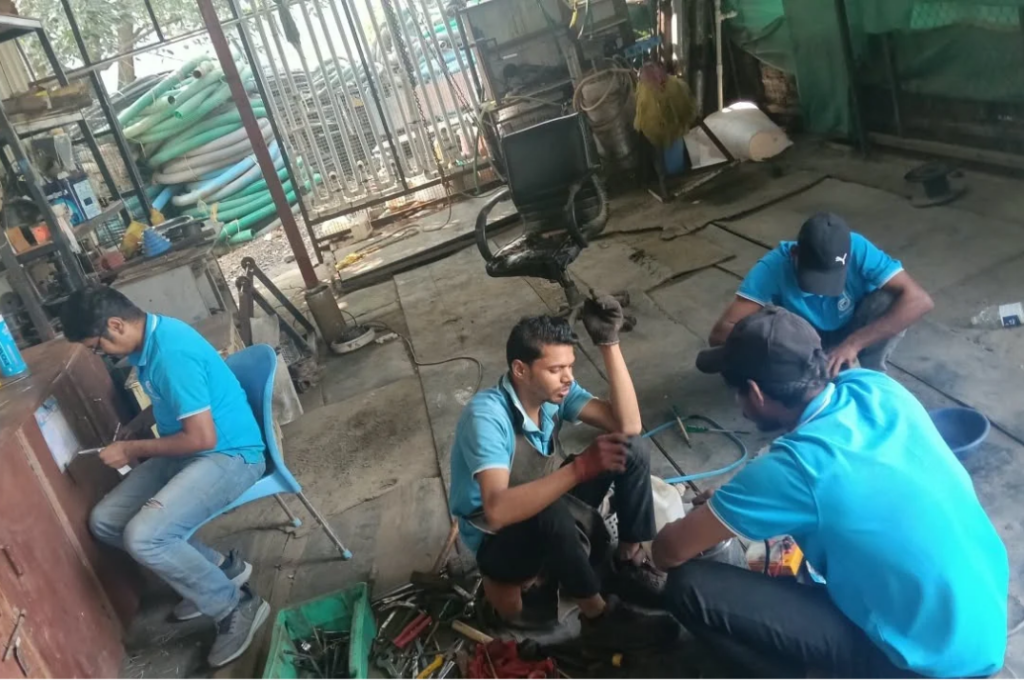
At Dhaneshwari, our field engineers combine submersible pump repair expertise with hands-on Pune & PCMC borewell engineering. Here is the systematic surface-to-downhole diagnostic and extraction protocol we follow for 4.5-inch and 6.5-inch borewells.
1. Surface-First Diagnostics: 4 Tests Before Pulling the Borewell Pump
Before mobilizing a lifting tripod or winch crane, run these four electrical and hydraulic checks right at the borewell control panel:
- Panel & Incoming Phase Verification: Check line-to-line voltage (380V–415V for 3-phase; 210V–240V for single-phase), burnt overload relay contacts, and capacitor microfarad drop (single-phase units losing >15% capacitance fail to start and overheat the auxiliary winding).
- Clamp-Meter Amperage Profiling
- - Zero / very low amps: Open circuit in cable/winding, snapped coupling, or pump running dry above water level.
- - Spike to Locked Rotor Amps (LRA) followed by immediate trip: Seized pump bowls from sand locking, jammed thrust bearing, or dead-shorted winding.
- - Pulsating amps with intermittent flow: Aquifer drawdown (water table dropping below suction casing during pumping).
- Megger Insulation Resistance (IR) & Winding Continuity : Disconnect the drop cable from the panel and measure phase-to-earth IR. Healthy submersible circuits read >20–100 MΩ. Readings below 1 MΩ indicate either water ingress at the 3-core flat cable heat-shrink joint or stator winding failure—though only pulling the upper joint confirms which one.
- Column Hold / NRV Leak Check : If the pump starts smoothly at normal amps but takes minutes to reach the surface or drains back immediately upon shut-off, suspect a stuck Non-Return Valve (NRV) or corroded riser pipe pinholes rather than motor burnout.
2. Borewell Submersible Failure Matrix: Repair vs. Borewell Rejuvenation
In Pune’s weathered basalt and murrum strata, mechanical pump wear and aquifer siltation frequently occur together. Use this diagnostic matrix to decide the exact corrective scope:
Downhole / Workshop Finding |
Engineering Cause |
Corrective Procedure |
Preventive Upgrade |
|---|---|---|---|
|
Worn Carbon Thrust Bearing & Rotor Drag
|
Dry running, low water-fill level in motor, or upward thrust overload130°C (Class-B) to 155°C (Class-F)
|
Full motor teardown, thrust pad & sleeve replacement, dynamic alignment
|
Install dry-run current-sensing relay & water-level float/probe cutoff
|
|
Burnt Water-Filled / Oil-Filled Stator
|
Single-phasing, voltage sag, or sand-locked impeller stall
|
Waterproof XLPE / poly-wrap motor rewinding & hydrostatic seal test
|
Add phase-failure & under/over-voltage digital protection panel
|
|
Sand-Locked Multi-Stage Impeller Stack
|
Collapsed topsoil fissure, high silt draw, or missing sand guard |
Bowl-stack teardown, impeller/diffuser replacement, SS sand-guard fitment
|
Perform 1,200 CFM air-compressor flushing & RWH borewell recharge
|
|
Water-Logged Cable Splice / Pinholed Drop Cable |
Poorly taped submersible joint rubbing against rock wall or casing edge |
Resin-cast / vulcanized waterproof jointing or full heavy-duty 3-core replacement
|
Install centralizer cable clips every 10 ft along riser pipe
|
3. Water-Filled vs. Oil-Filled Submersible Motor Repair Nuances
Many sites mix up maintenance requirements between the two dominant submersible motor designs:
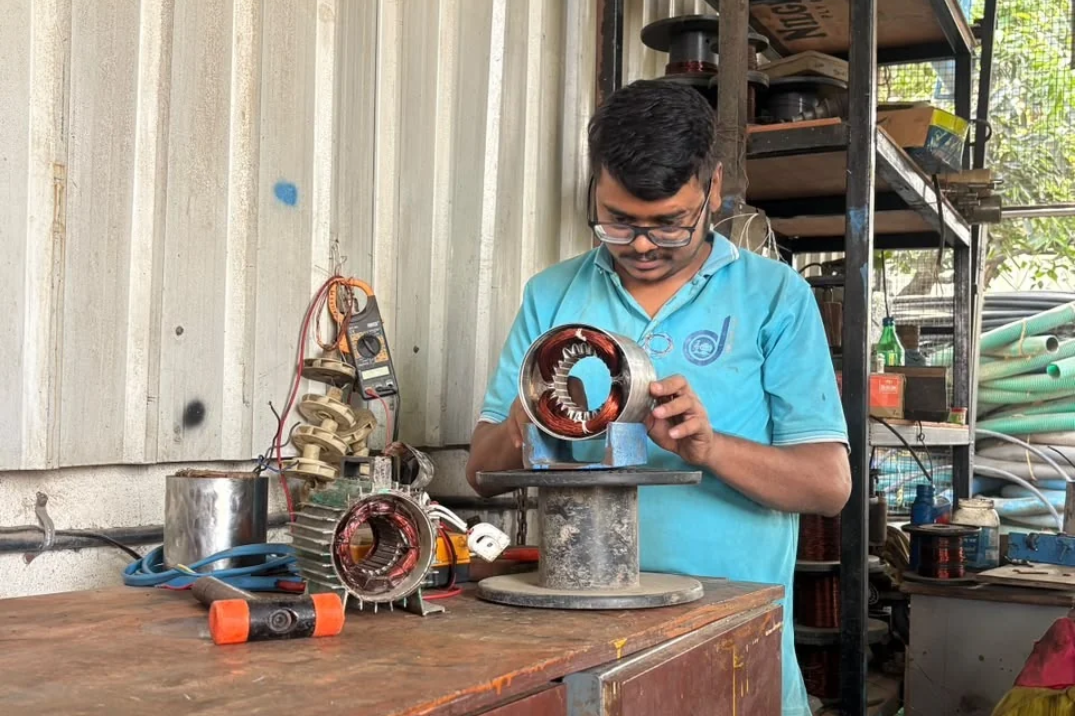
- Water-Filled Submersible Motors (Common in 4.5" & 6.5" High-Head Borewells) : Use pure distilled/clean water (often with anti-corrosion glycol additive) for internal cooling and thrust-bearing lubrication, wound with waterproof XLPE/PVC-insulated copper wire. Always verify breather diaphragm integrity and top up clean water before lowering—forgetting to prime a water-filled motor burns its thrust bearing within minutes.
- Oil-Filled Submersible Motors (Common in High-Torque & Commercial Units) : Sealed with food-grade dielectric cooling oil and a rotating mechanical lip/carbon-ceramic seal at the top neck. Overhaul requires vacuum-testing the mechanical seal and replacing emulsified (milky) oil completely before test-bench running.
4. Safe Deep-Well Extraction & When to Flush Before Re-Lowering
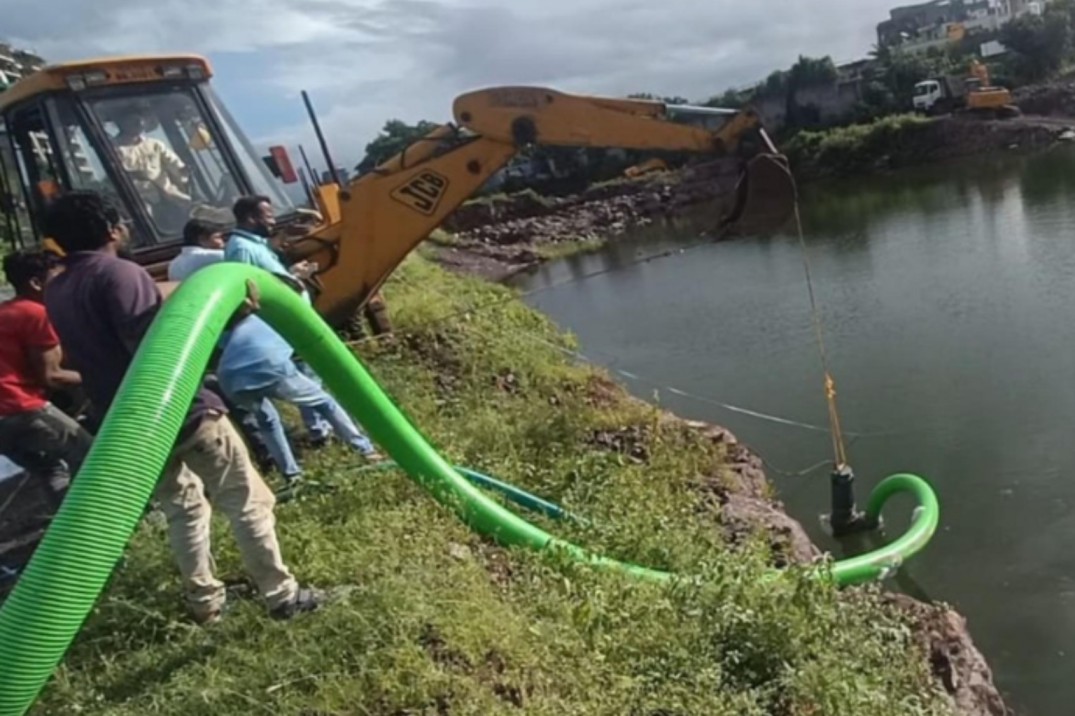
Attempting to yank a sand-locked pump out of a 600-foot borewell with an improvised pulley risks snapping the safety rope or parting the HDPE pipe—turning a routine repair into a costly fishing operation. Our field crews use calibrated motorized winches, pipe-clamp elevators, and controlled surge-pulling techniques to recover stuck pumps intact.
If your extracted pump shows heavy silt scoring on its SS304 bowls or worn sand guards, never lower the freshly repaired pump back into a silted borehole. First flush the borewell with a high-pressure air compressor to clear stone dust and open rock fissures, and pair your well with clean filtered rainwater borewell recharge so summer yield stays strong. If you need temporary water transfer or pit dewatering during maintenance, explore our pump selection guide, rental fleet, or browse more field guides on the Dhaneshwari Engineering Blog.
Borewell Pump Tripping, Low Yield, or Needs Safe Extraction?
Call Dhaneshwari for rapid on-site Megger testing, motorized deep-well extraction, workshop overhaul, and turnkey re-installation across Pune & PCMC.Book Site Inspection
5. Frequently Asked Questions (FAQs)
Run a clamp-meter current check and a 500V/1000V Megger test at the starter panel. If amps fluctuate sharply and flow stops after 5–10 minutes of normal pumping, water-table drawdown is likely. If the breaker trips instantly at locked-rotor amps or Megger resistance reads near zero, the cable joint or motor winding has failed.
Yes. Our mobile extraction and repair team handles 4.5-inch and 6.5-inch borewells across Dhayari, Kothrud, Wakad, Baner, Hinjawadi, Bhosari, and Chakan—covering motorized lifting, pump overhaul/rewinding, cable jointing, and air-compressor borewell flushing.
For 3 HP to 15 HP commercial stainless-steel multi-stage pumps where the bowl assembly and casing are intact, waterproof XLPE rewinding plus bearing/seal overhaul typically saves 50%–65% compared to buying a new OEM unit.
Recent Posts