Submersible vs. Mud Dewatering Pumps Selection Guide for Construction Sites
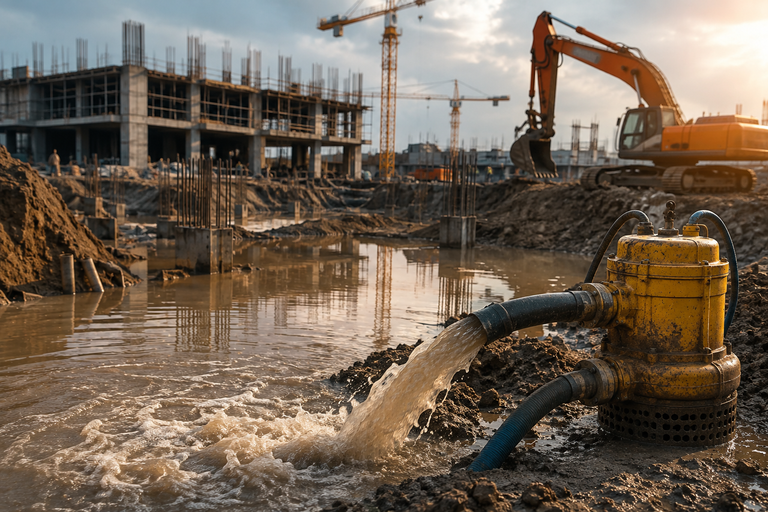
Removing unwanted water from basement excavations, foundation footings, and utility trenches is critical for maintaining site safety and structural progress. However, selecting the wrong type of dewatering pump can lead to frequent clogging, motor burnout, and severe project delays.
Construction sites in Pune and Maharashtra encounter diverse water conditions—ranging from clean groundwater seepage to thick, silt-heavy rainwater slurry. The two most common pumping solutions are Submersible Dewatering Pumps and Mud Dewatering Pumps. This engineering selection guide outlines their technical differences, operational advantages, and ideal site applications.
Construction sites in Pune and Maharashtra encounter diverse water conditions—ranging from clean groundwater seepage to thick, silt-heavy rainwater slurry. The two most common pumping solutions are Submersible Dewatering Pumps and Mud Dewatering Pumps. This engineering selection guide outlines their technical differences, operational advantages, and ideal site applications.
Quick Pump Selection Rule of Thumb:
- Choose Submersible Pumps if you need quiet operation, deep pit vertical lift, and are pumping water with light silt (<10% solids).
- Choose Mud Pumps if you are handling thick mud, sand, gravel slurry (up to 25–30% solids), or operating on unpowered remote excavation sites.
1. What Is a Submersible Dewatering Pump?
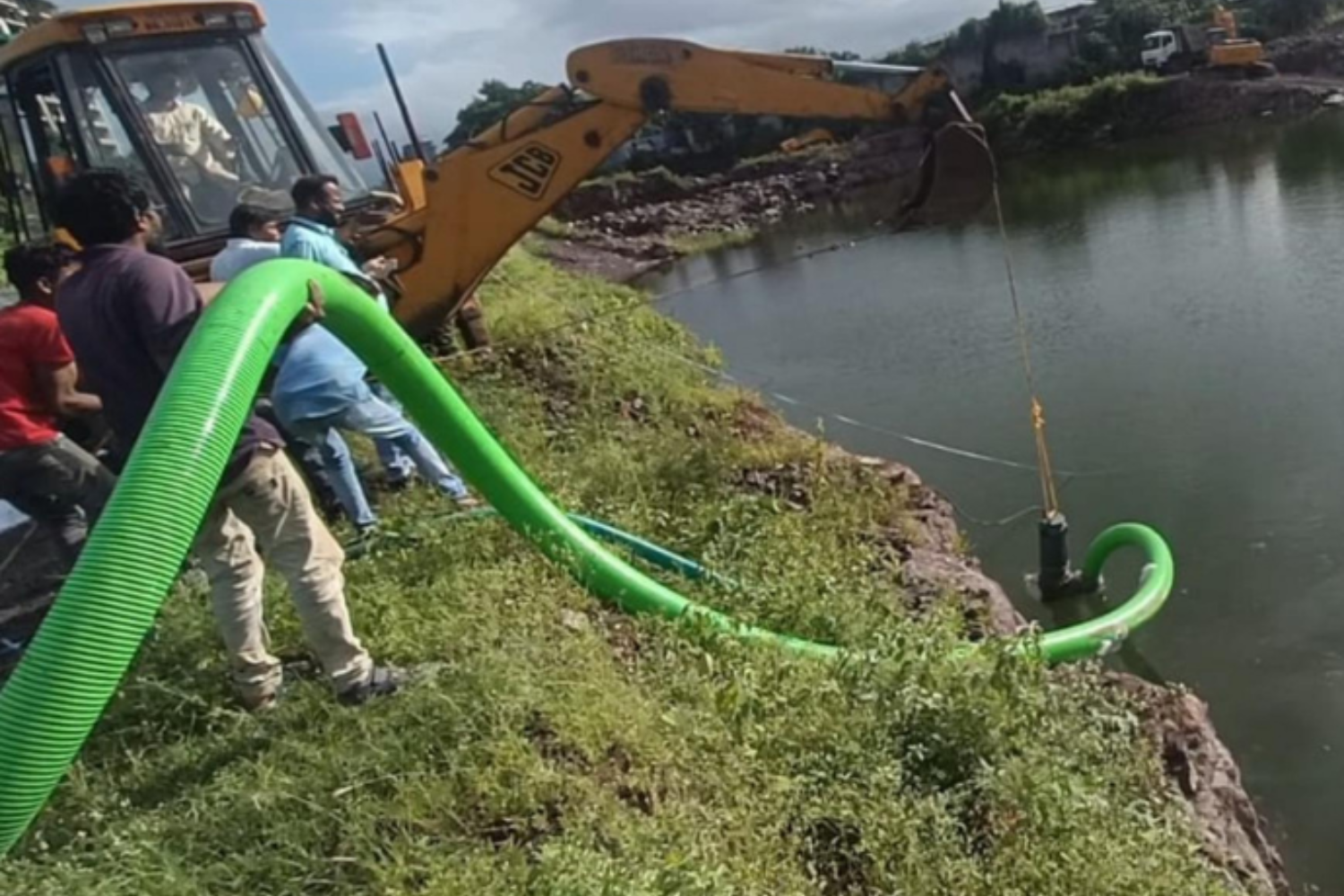
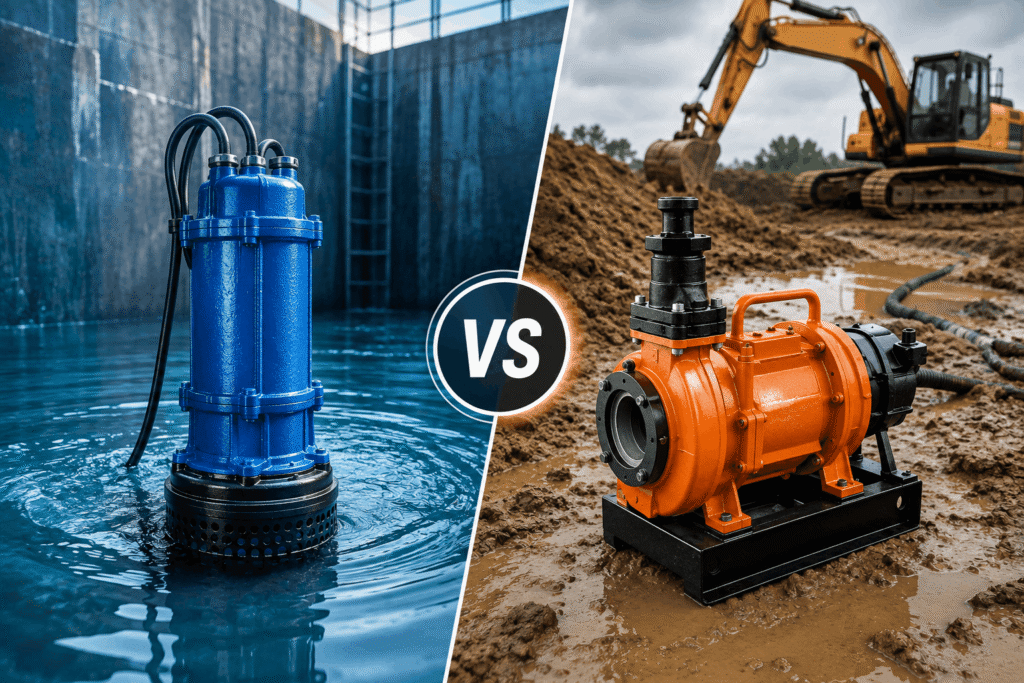
A submersible dewatering pump features a hermetically sealed motor close-coupled to the pump body. The entire unit is submerged directly into the sump pit or flooded area, pushing water upward to the surface discharge point.
Key Technical Features:
- Submerged Operation: Eliminates suction priming issues since the pump operates underwater under positive head pressure.
- High Elevation Lift: Capable of pumping water out of deep basements (20 to 50+ meters vertical dynamic head).
- Quiet & Energy Efficient: Water around the motor housing absorbs operating noise and acts as a natural cooling medium.
Ideal Applications for Submersible Pumps:
- Basement excavation sumps and underground parking construction.
- Groundwater table lowering and wellpoint drainage systems.
- Clean rainwater runoff and stormwater pit clearing.
2. What Is a Mud Dewatering Pump?
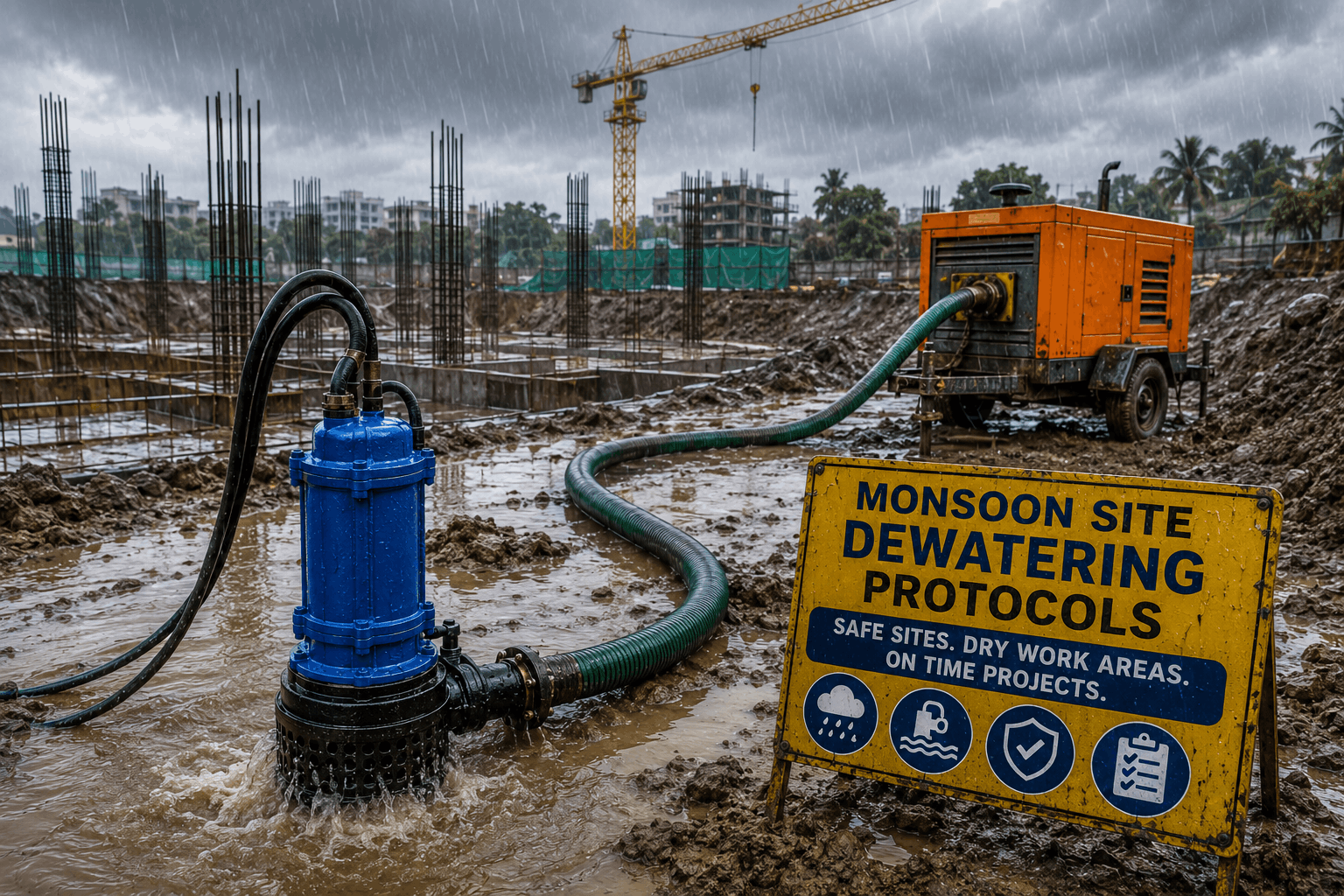
A mud dewatering pump (also known as a trash pump or self-priming slurry pump) is a heavy-duty, surface-mounted centrifugal pump designed to move water containing high percentages of solid particles, sand, mud, and organic debris.
Key Technical Features:
- Heavy Solid Handling: Equipped with open vortex impellers and hardened chrome steel wear plates that pass solid stones (up to 25mm–50mm sphere size).
- Self-Priming Design: Placed on dry land near the pit edge with a reinforced suction hose lowered into the mud
- Diesel Engine Powered: Operates independently without requiring electrical grid connections or site power generators.
Ideal Applications for Mud Pumps:
- Heavy monsoon excavation pits containing black cotton soil slurry.
- Borewell piling slurry removal and bridge pier foundation work.
- Remote infrastructure sites, road construction, and riverbank work.
3. Side-by-Side Technical Comparison Matrix
|
Feature / Parameter
|
Submersible Dewatering Pump
|
Diesel Mud Dewatering Pump
|
Operating Position |
Fully Submerged inside Sump Pit |
Surface Mounted on Dry Ground |
|---|---|---|
|
Solid Handling Capacity |
Up to 10% (Fine Silt / Sand) |
Up to 25% - 30% (Heavy Mud / Stones) |
|
Power Source |
Electric Motor (Grid / Generator) |
Diesel Engine / Electric Motor |
|
Priming Requirement |
Self-Priming (Submerged) |
Self-Priming (Surface Suction Lift) |
|
Max Elevation Head |
High Head Capability (30m - 60m+) |
Medium Head (15m - 30m) |
|
Noise Level |
Very Low (Underwater) |
Medium to High (Engine Noise) |
4. How to Calculate Required Pump Capacity
Before renting or purchasing a pump, calculate your required flow rate (Q) using this standard formula:
Required Flow Rate (m³/hr) = [Excavation Pit Volume (m³) + Expected Hourly Rainfall Runoff (m³)] × 1.25 (Safety Factor)
During heavy rainfall events in Maharashtra, combine continuous low-level submersible sumps with standby diesel mud pumps to handle sudden flash downpours. Review our operational guide on Monsoon Site Dewatering Protocols in Maharashtra.
Required Flow Rate (m³/hr) = [Excavation Pit Volume (m³) + Expected Hourly Rainfall Runoff (m³)] × 1.25 (Safety Factor)
During heavy rainfall events in Maharashtra, combine continuous low-level submersible sumps with standby diesel mud pumps to handle sudden flash downpours. Review our operational guide on Monsoon Site Dewatering Protocols in Maharashtra.
5. Maintenance Considerations & Wear Resistance
Abrasive slurry causes rapid impeller wear if maintenance is neglected. Follow proper servicing schedules for both pump types
- Clean suction strainers after every shift to prevent impeller clogging.
- Inspect mechanical seal oil chambers weekly on electric submersible pumps.
- Check engine oil, air filter, and V-belt tension on diesel mud pumps. Refer to our Equipment Maintenance Checklists for Contractors.
Need Dewatering Pump Rentals or Technical Advice in Pune?
Dhaneshwari Electricals & Pump Services provides high-performance submersible pumps, diesel mud pumps, and 24/7 site dewatering solutions.
Get an Instant Pump Rental Quote
6. Frequently Asked Questions (FAQs)
A: Running an electric submersible pump dry for extended periods causes the motor to overheat and destroys the mechanical shaft seal. Always use automatic float switches to shut off the pump when the water level drops.
A: For deep basements with groundwater seepage, electric submersible pumps are ideal due to high vertical lift and silent operation. If heavy mud accumulation occurs during monsoon excavation, use a diesel mud pump first to clear the heavy slurry.
A: You can contact Dhaneshwari Electricals & Pump Services for immediate deployment of submersible pumps, mud pumps, suction hoses, and expert technicians across Pune and PCMC.
Recent Posts