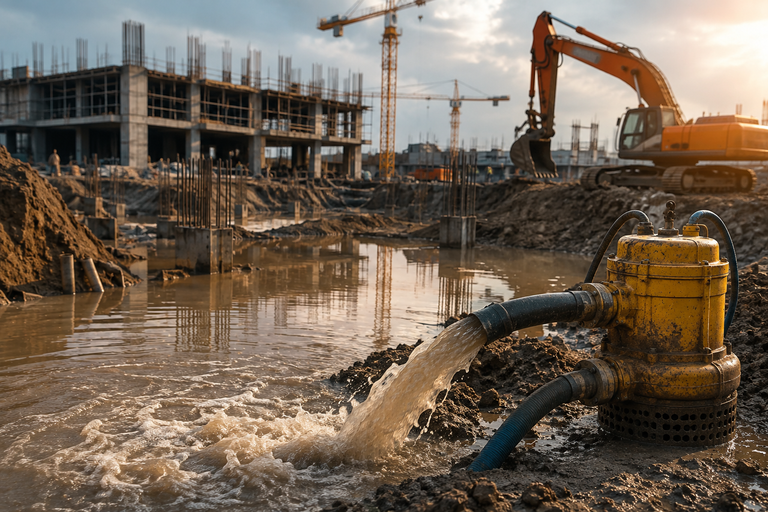

Monsoon Site Dewatering Protocols in Maharashtra: Construction Safety Guide
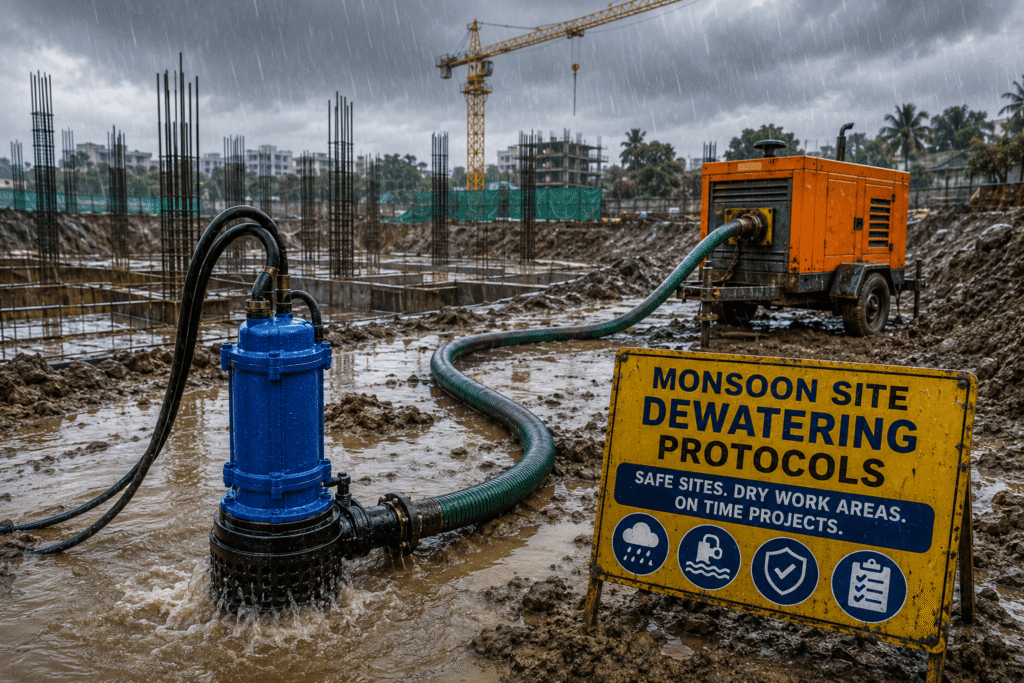
The monsoon season in Maharashtra particularly across high-growth hubs like Pune, PCMC, Mumbai, and Thane—presents significant engineering and logistical challenges for civil contractors. Heavy downpours, high water tables, and clay-rich soil conditions can turn deep excavations and foundation pits into waterlogged basins within hours.
Without structured monsoon site dewatering protocols, construction projects face costly delays, foundation instability, soil collapse, equipment damage, and severe safety hazards. Implementing a proactive dewatering plan ensures seamless site operations, structural integrity, and compliance with Indian construction safety standards.
Without structured monsoon site dewatering protocols, construction projects face costly delays, foundation instability, soil collapse, equipment damage, and severe safety hazards. Implementing a proactive dewatering plan ensures seamless site operations, structural integrity, and compliance with Indian construction safety standards.
Key Takeaways for Civil Contractors:
- Conduct a pre-monsoon drainage audit before heavy rainfall begins.
- Select the correct pump type based on water solid/slurry percentage.
- Maintain active backup power generators for continuous dewatering.
Partner with a reliable local equipment supplier for dewatering pump rentals in Pune.
1. Renting vs. Buying Construction Equipment: Cost Comparison Matrix
|
Decision Factor
|
Purchasing New Equipment
|
Renting Equipment (Dhaneshwari)
|
Initial Investment (CapEx)
|
High upfront capital cost (100% purchase price)
|
Zero CapEx (Pay only affordable monthly / daily rent)
|
|---|---|---|
|
Cash Flow Impact
|
Ties up capital that could be used for project operations
|
Predictable monthly operating expense (OpEx)
|
|
Maintenance & Repairs
|
Contractor bears all spare part, oil, and mechanic costs
|
Serviced & tested machines provided with full support |
|
Depreciation & Resale Loss |
Machinery loses 15%–25% value per year
|
Zero depreciation risk for the contractor |
|
Idle Storage Costs
|
Requires secure yard storage during off-project months
|
Return equipment immediately after project completion
|
1. Understanding Maharashtra's Monsoon Hydrology & Site Risks
Maharashtra experiences intense rainfall spells between June and October, with regions in Western Maharashtra and the Western Ghats receiving localized heavy downpours. Excavation sites face three distinct water entry vectors :
- Direct Surface Runoff: Rainwater flowing over unpaved ground into excavated basement areas.
- Subsurface Seepage: Rising groundwater levels forcing water through soil strata and retaining walls.
- Slurry Accumulation: Rainwater mixing with loose clay soil (such as Black Cotton Soil), creating heavy mud that standard water pumps cannot handle.
2. Pre-Monsoon Dewatering Site Audit Checklist
Preparation must begin 3 to 4 weeks prior to the arrival of the monsoon. Site engineers should follow this step-by-step audit protocol:
- Sump Pit Construction: Excavate dedicated, gravel-lined sump pits at the lowest elevation points of the site to collect surface runoff.
- Catchment Drains: Dig perimeter interceptor ditches around the excavation boundary to divert surface water away from slope edges.
- Pump Testing & Servicing: Test all primary and standby dewatering pumps under full load. Check impellers, mechanical seals, strainers, and discharge hoses.
- Backup Generator Readiness: Ensure diesel generators have sufficient fuel storage and automatic transfer switches (ATS) in case grid power fails during storms.
3. Choosing the Right Dewatering Pump Equipment
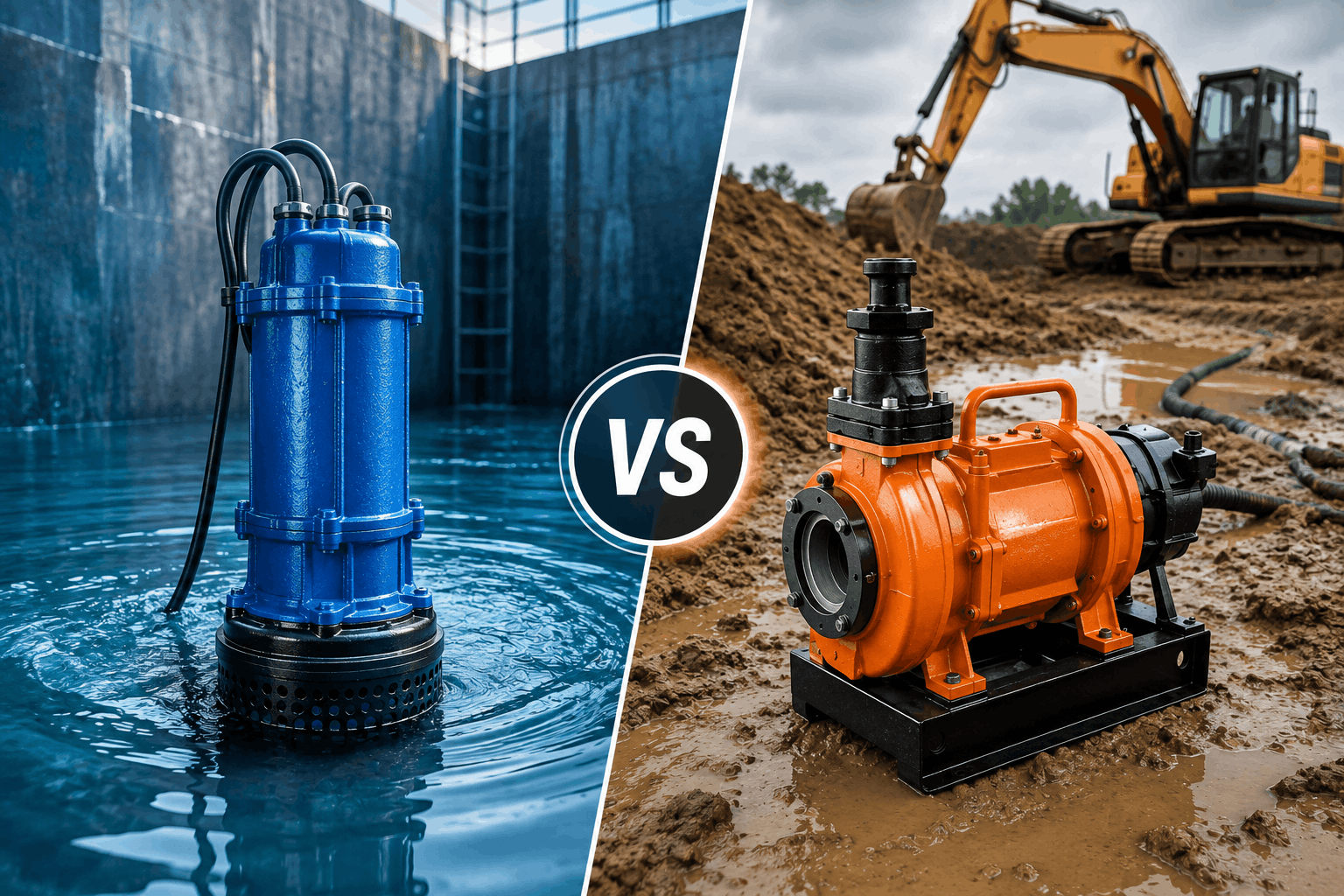
Selecting the appropriate pump technology depends on the volume of water, total dynamic head (elevation lift height), and the concentration of suspended solids. Using a clean water pump for muddy site water will cause rapid impeller wear and motor burnout.
For a detailed breakdown of pump selection criteria, refer to our comprehensive guide on Submersible vs. Mud Dewatering Pumps Selection.
|
Pump Type
|
Solid Handling Capacit
|
Best Application
|
Power Source
|
Submersible Dewatering Pump |
Up to 10% (Light Silt / Water) |
Basement sumps, groundwater lowering, clear runoff |
Electric / Generator |
|---|---|---|---|
|
Diesel Engine Mud Pump |
Up to 25% - 30% (Heavy Mud & Slurry) |
Foundation excavations, unpowered remote sites, heavy silt pits |
Diesel Engine |
|
Slurry / Cutter Pump |
High Solids & Debris
|
Borewell piling pits, deep foundation slurry removal |
High-Torque Electric |
4. Standard Operating Procedures (SOP) During Heavy Rainfall
When heavy monsoon warnings are issued by the India Meteorological Department (IMD) for Pune or surrounding districts, execute the following operational steps:
- A. Continuous Sump Pumping - Maintain continuous low-level pumping in primary sumps rather than allowing water to accumulate. Allowing deep water pools to form destabilizes base soil compaction.
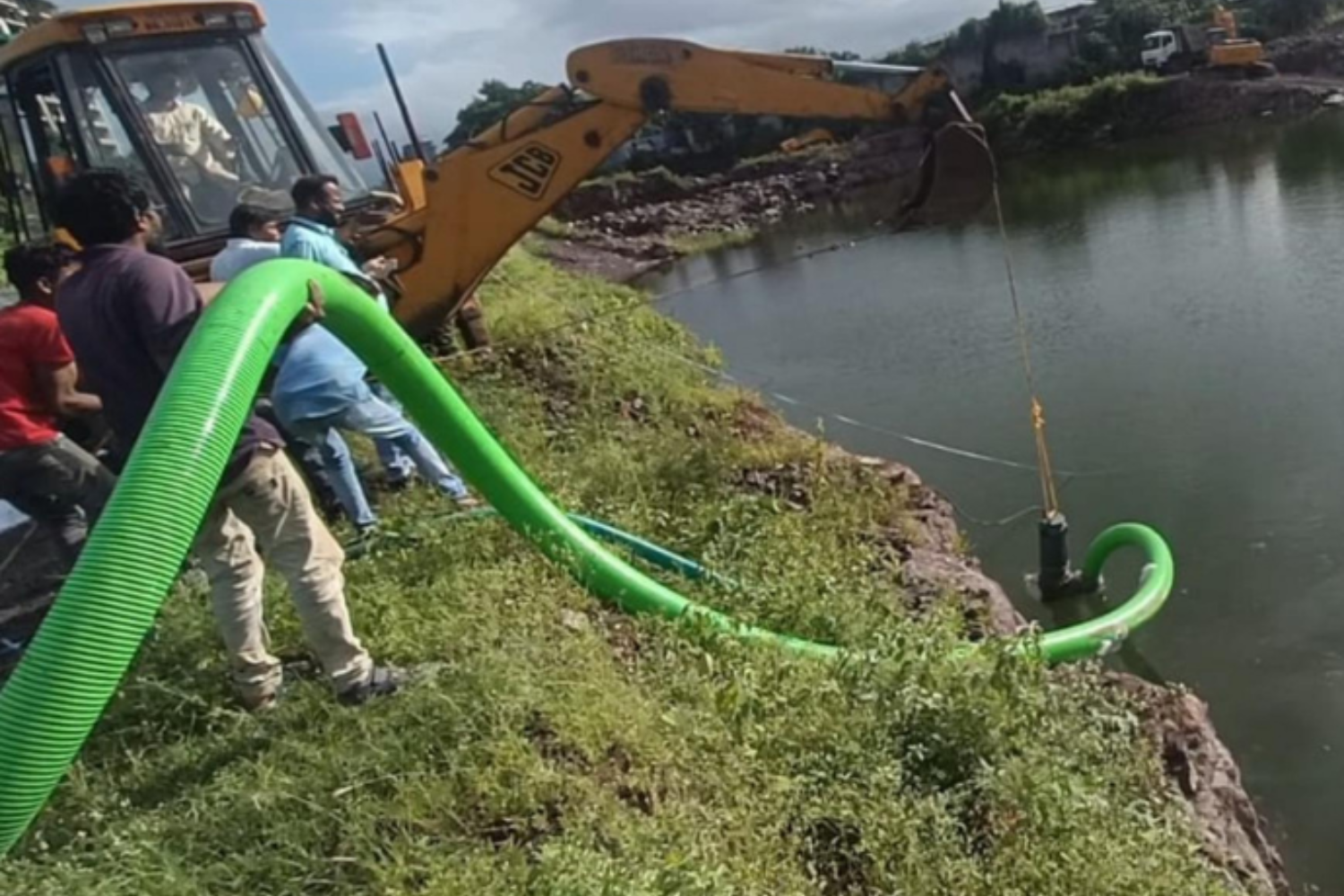
- B. Hose & Discharge Pipe Management - Ensure discharge hoses extend to municipal storm drains or approved drainage channels. Avoid discharging water near adjacent structural footings or soil slopes.
- C. Electrical Safety Protocols - Water and high-voltage electricity pose extreme hazards on construction sites. All submersible pump cable connections must be elevated above flood level using waterproof junction boxes and protected with 30mA Residual Current Circuit Breakers (RCCB / ELCB).
5. Soil Stability & Compaction Maintenance
After dewatering an excavation pit, the underlying soil must be inspected before resuming structural concreting or steel reinforcement work. Saturation reduces soil bearing capacity. Utilize heavy-duty compaction equipment, such as walk-behind rollers and earth compactors in Pune, to restore base compaction to design density standards.
Need Emergency Dewatering Pumps for Your Construction Site?
Dhaneshwari Electricals & Pump Services provides 24/7 dewatering pump rentals, mud pumps, and emergency site drainage solutions across Pune and Maharashtra.
6. Frequently Asked Questions (FAQs)
A: Required pump capacity depends on excavation depth and rainfall rate. Typically, a 1-acre site experiencing 50mm/hr peak monsoon rainfall requires a minimum pump capacity of 500 to 800 GPM (Gallons Per Minute), supported by a standby diesel mud pump of equal rating.
A: Yes, heavy-duty industrial diesel mud pumps are designed for continuous duty operation. Ensure regular engine oil level checks, clean fuel supply, and strainer inspection every 8 to 12 hours of continuous operation.
A: You can contact Dhaneshwari Electricals & Pump Services directly for immediate deployment of submersible pumps, mud pumps, and expert site dewatering technicians across Pune, PCMC, and neighboring districts.
Recent Posts